From the flight paths above Ogle Airport in Guyana to the turbine bays of Orlando — I've spent a lifetime chasing two passions: aviation and technology. This is where both worlds live.
The men and women whose ideas changed everything
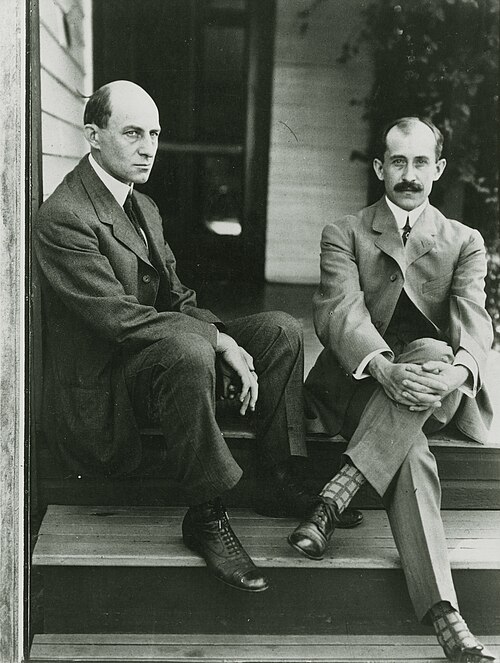
Pioneers of Powered Flight · 1903
On December 17, 1903, at Kitty Hawk, North Carolina, two bicycle mechanics from Dayton, Ohio changed the course of human history. Their Flyer I stayed airborne for just 12 seconds — but those 12 seconds cracked open the sky for everyone who came after. What made the Wrights extraordinary wasn't just the invention — it was the method. Systematic, obsessive, methodical. They were engineers before engineering was cool.
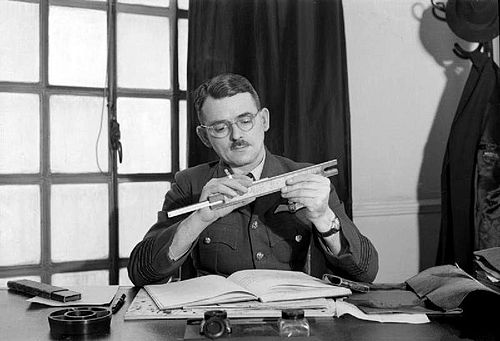
Wikipedia →Inventor of the Jet Engine · 1930
A Royal Air Force officer who couldn't get the establishment to listen. Frank Whittle filed his patent for the turbojet engine in 1930 — and spent nearly a decade fighting bureaucracy before his engine ever flew. His persistence gave the world the jet age. Every commercial flight you've ever taken traces its lineage to Whittle's stubborn refusal to give up.
Wikipedia →Pioneer of Jet Propulsion · 1939
Independently and simultaneously, German physicist Hans von Ohain developed his own turbojet design — and his engine flew first, powering the Heinkel He 178 in August 1939. History placed Whittle and von Ohain on opposite sides of a war, yet the two men later became friends and colleagues, united by the same dream.
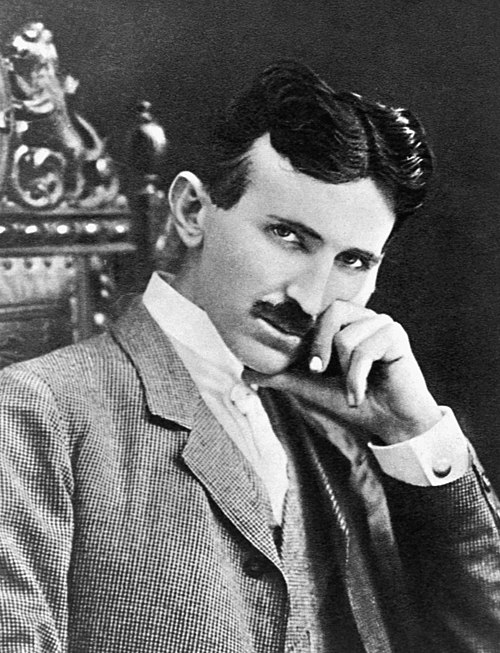
Wikipedia →Inventor & Electrical Engineer · 1856–1943
Tesla's mind operated in a frequency the rest of the world couldn't tune into. He gave us alternating current, the induction motor, wireless transmission of energy, and a vision of the future so far ahead of his time that we're still catching up. He died poor and largely uncelebrated. History has since corrected that debt — if incompletely.
Wikipedia →Inventor & Industrialist · 1847–1931
Edison industrialized invention itself. The phonograph, the practical incandescent bulb, the motion picture camera, and the world's first industrial research laboratory at Menlo Park. He didn't just invent things — he invented the process of inventing things. His rivalry with Tesla over AC vs DC is history's most consequential engineering argument, and both men, in different ways, won.
Wikipedia →Engineer & Inventor · 1854–1931
In 1884, Charles Parsons invented the steam turbine — and in one stroke, transformed how humanity generated power. His turbine-powered ship, the Turbinia, crashed the 1897 Naval Review uninvited, racing past the entire Royal Navy at 34 knots. Steam turbines today generate the majority of the world's electricity. Every time you flip a light switch, you're downstream of Parsons.
Wikipedia →Founder of Modern Nursing · 1820–1910
Before Florence Nightingale, hospitals were places people went to die faster. During the Crimean War, she transformed a field hospital through radical ideas: handwashing, sanitation, data tracking, and compassionate care. She was also a pioneering statistician — her polar area diagrams were among the earliest uses of data visualization to drive public health policy. She didn't just found nursing. She founded evidence-based healthcare.
Wikipedia →Discoverer of Penicillin · 1881–1955
In 1928, Fleming returned from vacation to find a contaminated petri dish — and instead of discarding it, he looked closer. That moment of curiosity saved an estimated 200 million lives. Penicillin didn't just treat infection; it made modern surgery, chemotherapy, and organ transplantation possible.
Wikipedia →Chemist · 1868–1934
Fritz Haber synthesized ammonia from nitrogen and hydrogen — the Haber-Bosch process — making artificial fertilizer possible and feeding roughly half the world's current population. He also developed chemical weapons in World War I. No figure in scientific history better illustrates the double-edged nature of human ingenuity. His wife, Clara Immerwahr — the first woman to earn a chemistry PhD in Germany — took her own life in protest of his weapons work. History holds both truths simultaneously.
Wikipedia →Medical Imaging Pioneers · 1970s–2003
The story of MRI is inseparable from its controversy. Raymond Damadian built the first full-body MRI scanner in 1977 and held foundational patents. Paul Lauterbur and Peter Mansfield developed the mathematical and imaging techniques that made MRI clinically practical — and received the 2003 Nobel Prize. Damadian was notably excluded, a decision he publicly protested and which remains debated to this day. The truth is that all three men contributed threads that together became one of medicine's most transformative tools. The machine that saves lives every day doesn't belong to any one name.
Pioneers of the Automobile · 1885–1926
They never met in person, yet invented the same thing independently, in the same country, within years of each other. Karl Benz built the Benz Patent-Motorwagen in 1885 — the first true gasoline-powered automobile. Gottlieb Daimler developed a high-speed petrol engine around the same time and attached it to everything — a bicycle, a boat, a carriage. After both men had died, their companies merged in 1926 to form Daimler-Benz. The Mercedes-Benz name carried a legacy built by two men who never shook hands.
The Mercedes name has a human story: Emil Jellinek, a businessman and racing enthusiast, ordered a series of Daimler cars on the condition they be named after his daughter — Mercedes. A ten-year-old girl's name became the most recognizable automotive brand in history.
Engineer & Inventor · 1858–1913
Rudolf Diesel conceived his compression-ignition engine in 1892 as a more efficient alternative to the steam engine — and his name became a word. Diesel engines power ships, trains, trucks, generators, and agricultural equipment across the globe. Diesel himself disappeared from a steamship crossing the English Channel in 1913 under mysterious circumstances. The engine outlived its inventor by more than a century, and it's still running.
Wikipedia →Co-founder & CEO, NVIDIA · b. 1963
Jensen Huang co-founded NVIDIA in 1993 with a vision for graphics processing that nobody fully understood yet. Decades later, the GPU he championed became the fundamental compute substrate of modern AI. The CUDA platform, the H100 chip, the data center buildout that powers every large language model running today — all flow from decisions Huang made when "AI" was still science fiction to most. He turned a gaming chip company into the infrastructure of the future.
Wikipedia →Co-founders, Anthropic · est. 2021
Dario and Daniela Amodei left OpenAI in 2021 to found Anthropic with a core conviction: that the most powerful AI systems in history needed to be built carefully, or not at all. Dario, as CEO, drives the technical and safety research agenda. Daniela, as President, has built the operational foundation that makes that research sustainable. Together they've made Anthropic one of the most consequential AI safety organizations in the world — and Claude, the AI at the heart of it, reflects their belief that capability and safety are not opposites.
Ashish Vaswani · Noam Shazeer · Niki Parmar · Jakob Uszkoreit · Llion Jones · Aidan Gomez · Łukasz Kaiser · Illia Polosukhin · Google, 2017
In 2017, eight researchers at Google published a 15-page paper with a deceptively simple title. The Transformer architecture they introduced — built on the mechanism of self-attention — didn't just improve machine translation. It became the foundation of GPT, BERT, Claude, Gemini, and virtually every large language model that followed. Most people using AI today have never heard their names. They should.
Original Paper →Entrepreneur & Technologist · b. 1971
Love him or debate him — Elon Musk redefined what a private company could attempt. SpaceX made reusable rockets a reality and restored American crewed spaceflight. Tesla accelerated the global shift to electric vehicles by a decade. Whether you agree with his methods or not, the industries he disrupted will never look the same. Few figures in modern history have placed as many simultaneous bets on the future — and won enough of them to matter.
Wikipedia →Two decades of IT. A lifetime passion for aviation.
Currently completing FAA Airframe & Powerplant certification at the Aviation Institute of Maintenance in Orlando, Florida. My focus is turbine and powerplant systems — fuel systems, fire protection, engine instruments, and hydraulics. Hands-on training with industry-standard maintenance equipment and FAA advisory materials. Targeting MRO roles with major carriers upon certification.
Over two decades of enterprise IT experience spanning network architecture, firewall management, virtualization, and storage. Proficient with Proxmox VE, FortiGate, ZFS, Docker, and Linux server administration. Comfortable designing and maintaining resilient infrastructure in production environments.
Running a personal 3-node Proxmox cluster with ZFS, HA failover, and a full Docker stack — Jellyfin, Seafile, AdGuard Home, CrowdSec, Wazuh, Caddy reverse proxy, and VPN tunnels via strongSwan and WireGuard. If it can be self-hosted, I've probably tried it.
Tools & Technologies
Hands-on A&P coursework covering airframe, powerplant, and avionics systems — trained to FAA standards at AIM Orlando.
Designing and administering enterprise-grade networks, firewalls, and virtualization environments built for reliability.
Whether it's a hydraulic circuit or a Docker stack, I approach every system the same way — understand it completely, then simplify.
Self-hosting, monitoring, and automating infrastructure at home — because the best way to learn a system is to break it yourself first.
Some dreams don't die — they wait.
Growing up in Guyana, I lived beneath the flight paths of Ogle Airport. Every aircraft that passed overhead was less a machine and more a question I couldn't stop asking: how does that work, and how do I get closer to it?
Life had other plans first. I spent over two decades building expertise in IT infrastructure — Proxmox clusters, FortiGate firewalls, ZFS storage, enterprise networking. I got good at it. But the sky never stopped calling.
Today, I'm a full-time Airframe & Powerplant certification student at the Aviation Institute of Maintenance in Orlando, Florida, with a focus on turbine and powerplant systems. My goal is MRO work with a major carrier — bringing two decades of technical discipline from IT into the world of aircraft maintenance.
The detour wasn't wasted. Every troubleshooting mindset, every system I've diagnosed, every network I've hardened — it all translates. Aviation and IT speak the same language: precision, redundancy, and zero tolerance for failure.
"The best time to pursue a dream was twenty years ago. The second best time is now."Download CV ↓
A&P Student — Aviation Institute of Maintenance, Orlando
20+ years in IT infrastructure, networking, and systems engineering
Haines City, Florida
MRO opportunities with major carriers upon A&P certification
Some decisions look like pivots. This one felt more like coming home. A story about growing up near an airport, a 20-year detour through IT, and what it finally feels like to chase the dream.
Redundancy. Fault isolation. Zero single points of failure. Turns out IT infrastructure and aviation maintenance speak the same engineering language — and understanding one makes you better at the other.
In 2017, eight researchers published a 15-page paper that restructured the entire field of artificial intelligence. Most people using AI every day have never heard their names. Here's why they should.