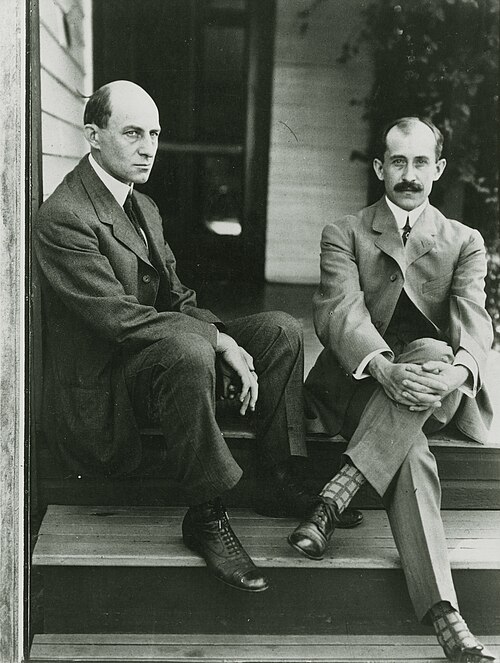
Wright Brothers
Pioneers of Powered Flight · 1903
On December 17, 1903, at Kitty Hawk, North Carolina, Orville and Wilbur Wright made the first controlled, powered airplane flight. It lasted 12 seconds. They ran a bicycle shop in Dayton, Ohio, and what stands out is how they worked: they built their own wind tunnel, tested wing shapes one at a time and kept careful records.
Wikipedia →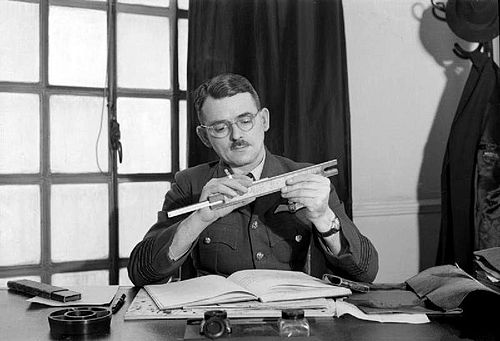
Frank Whittle
Inventor of the Jet Engine · 1930
Frank Whittle was a Royal Air Force officer who patented the turbojet engine in 1930. He struggled for years to get official support, and his engine didn’t fly until 1941, in the Gloster E.28/39. Modern airliner engines descend from his work and von Ohain’s.
Wikipedia →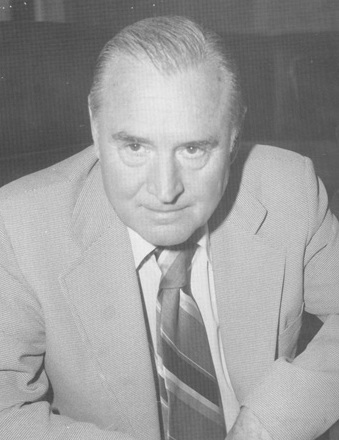
Hans von Ohain
Pioneer of Jet Propulsion · 1939
German physicist Hans von Ohain designed a turbojet independently of Whittle. His engine flew first, powering the Heinkel He 178 in August 1939. After the war he moved to the United States to work for the U.S. Air Force, and he and Whittle later became friends.
Wikipedia →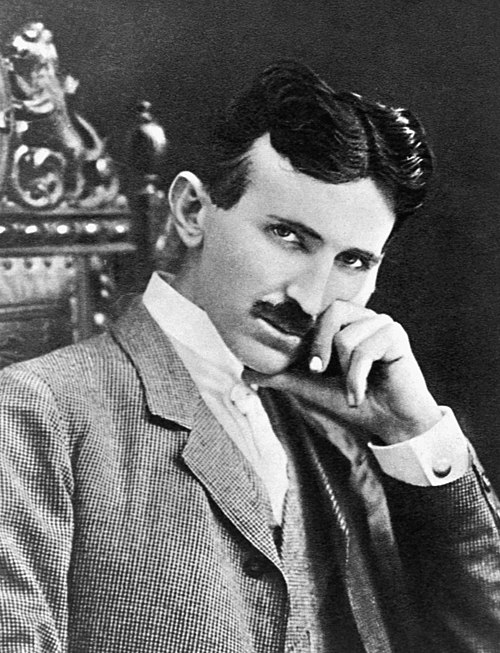
Nikola Tesla
Inventor & Electrical Engineer · 1856–1943
Tesla developed the alternating current system and the induction motor that most of the power grid still depends on. He also experimented with radio and wireless power. He was a gifted engineer but bad with money, and he died nearly broke in New York in 1943.
Wikipedia →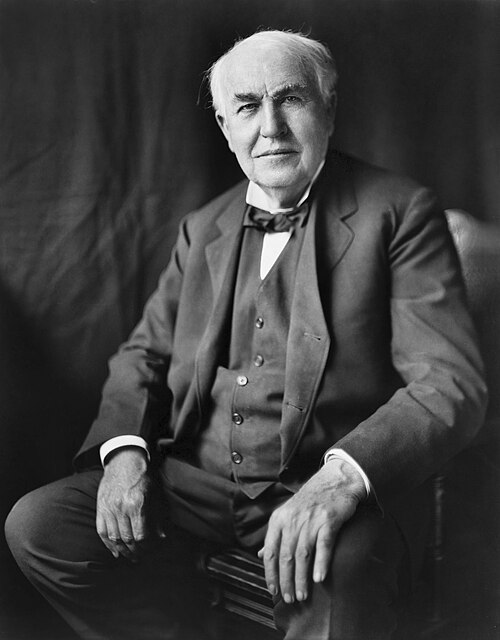
Thomas Edison
Inventor & Industrialist · 1847–1931
Edison and his team at Menlo Park produced the phonograph, a practical incandescent light bulb and early motion picture equipment. Menlo Park is often called the first industrial research lab. He backed direct current in the “war of the currents” against Westinghouse and Tesla, and AC won out for power distribution.
Wikipedia →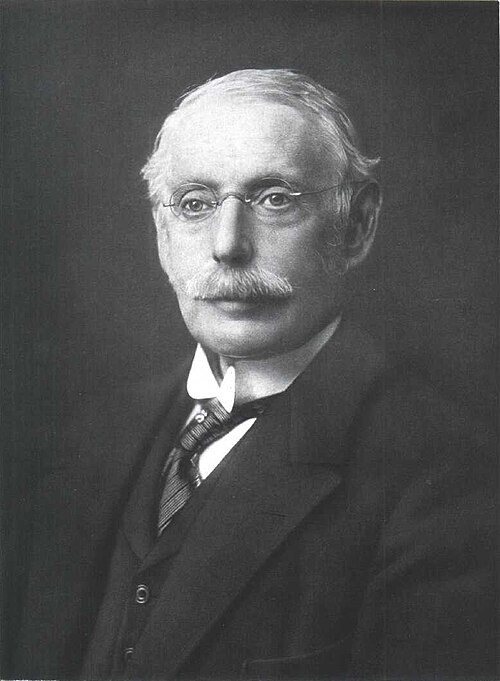
Charles Parsons
Engineer & Inventor · 1854–1931
Charles Parsons invented the modern steam turbine in 1884. In 1897 he showed up uninvited to the Royal Navy’s review at Spithead with his turbine-powered boat, Turbinia, and ran past the fleet at 34 knots. Steam turbines still generate a large share of the world’s electricity.
Wikipedia →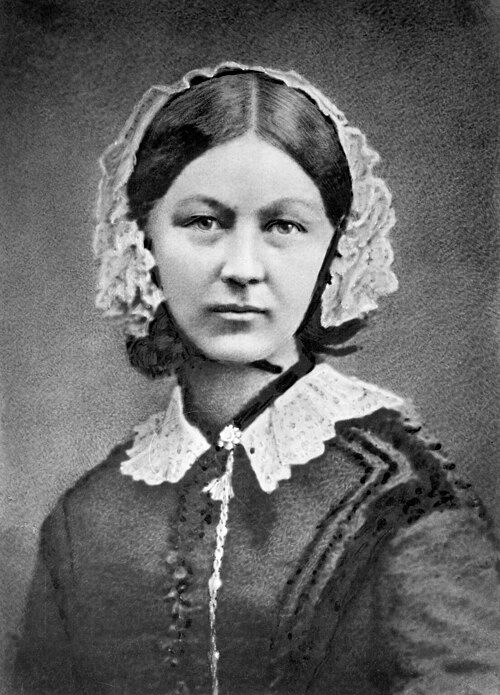
Florence Nightingale
Founder of Modern Nursing · 1820–1910
Florence Nightingale ran the nursing staff at the British army hospital in Scutari during the Crimean War and pushed for basic sanitation, clean water and ventilation. She kept detailed statistics on why soldiers were dying and used her polar area diagrams to get officials to change policy. She later founded a nursing school at St Thomas’ Hospital in London.
Wikipedia →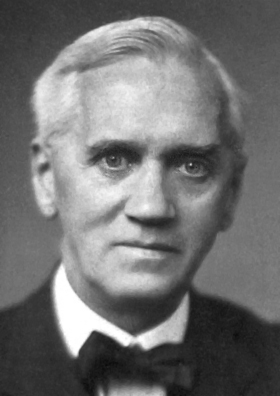
Alexander Fleming
Discoverer of Penicillin · 1881–1955
In 1928 Alexander Fleming noticed that mold growing on one of his culture plates had killed the bacteria around it. The mold was producing penicillin. Howard Florey and Ernst Chain turned it into a usable drug in the 1940s, and antibiotics went on to make surgery, chemotherapy and transplants far safer.
Wikipedia →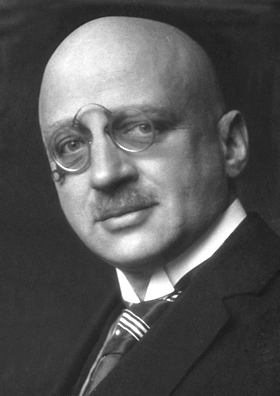
Fritz Haber
Chemist · 1868–1934
Fritz Haber worked out how to make ammonia from nitrogen and hydrogen. Scaled up by Carl Bosch, it became the Haber-Bosch process, and the fertilizer it produces now feeds a large part of the world. Haber also led Germany’s chemical weapons program in World War I. His wife, Clara Immerwahr, the first woman to earn a chemistry doctorate in Germany, opposed that work and took her own life in 1915.
Wikipedia →MRI Trio — Damadian, Lauterbur & Mansfield
Medical Imaging Pioneers · 1970s–2003
Raymond Damadian built the first full-body MRI scanner in 1977 and held early patents. Paul Lauterbur and Peter Mansfield developed the imaging methods that made MRI practical in hospitals, and they shared the 2003 Nobel Prize. Damadian was left out and protested publicly. All three contributed to the technology.
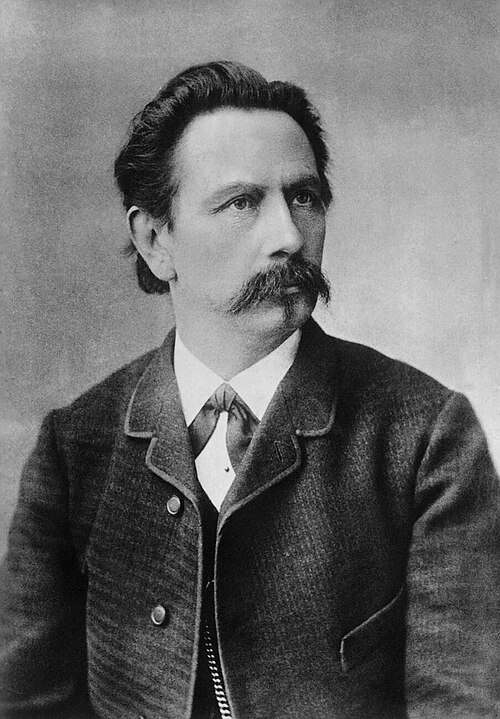
Karl Benz & Gottlieb Daimler
Pioneers of the Automobile · 1885–1926
Karl Benz and Gottlieb Daimler worked separately in Germany in the 1880s and reportedly never met. Benz built the Patent-Motorwagen in 1885, generally considered the first practical gasoline car. Daimler, working with Wilhelm Maybach, built a small high-speed gasoline engine and tried it in a motorcycle, a boat and a carriage. Their two companies merged in 1926 to form Daimler-Benz.
The Mercedes name came from Emil Jellinek, a businessman who sold and raced Daimler cars. He ordered a batch on the condition that they be named after his daughter, Mercedes, who was about ten at the time.
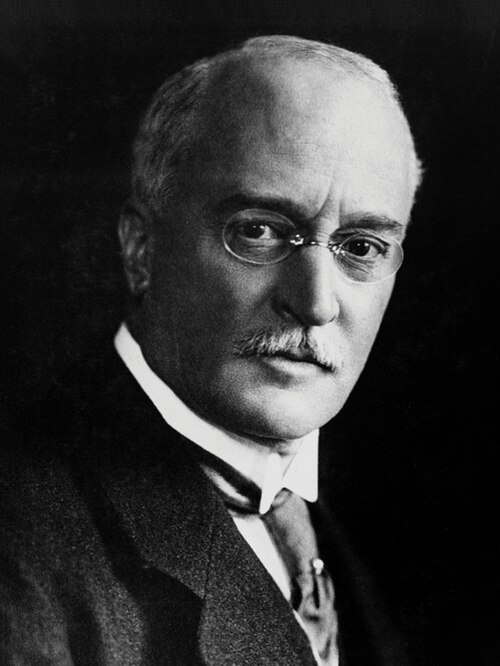
Rudolf Diesel
Engineer & Inventor · 1858–1913
Rudolf Diesel developed his compression-ignition engine in the 1890s as a more efficient alternative to steam. Diesel engines now power most ships, trains, trucks and generators. He disappeared from a steamship crossing the English Channel in 1913, and what happened to him is still unknown.
Wikipedia →The Modern Era
This page sticks to people whose work is finished. For more recent names in computing and space, here are some links.